
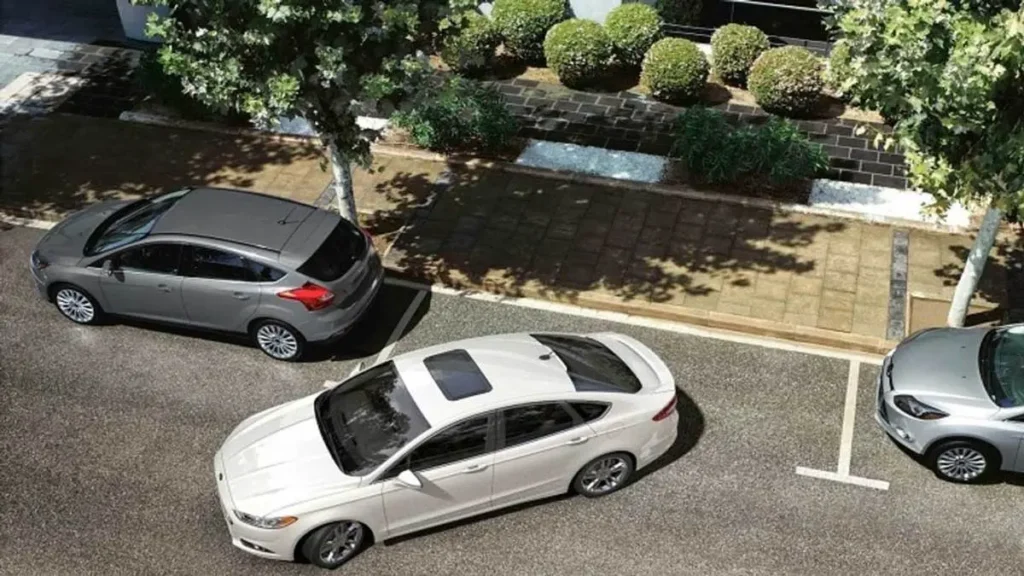
Parallel parking is the skill new drivers worry about most — and it gets much easier once you learn to use reference points instead of guessing. Here is the method most instructors teach, step by step.
Step by step
- Signal and line up. Stop beside the car in front of the space, about two to three feet away, with your rear bumpers roughly even.
- Back slowly and turn toward the curb. Check your mirrors and over your shoulder, then reverse at a crawl. When your rear wheels pass the other car’s rear bumper, turn the wheel fully toward the curb.
- Straighten at about 45 degrees. When your car is angled about halfway into the space, straighten the wheel and keep backing slowly.
- Turn away from the curb. Once your front bumper clears the car ahead, turn the wheel fully the other way and let the front of the car swing in.
- Center and check. Straighten the wheels, pull forward or back to center yourself in the space, and check that you are close and parallel to the curb.
The exact reference points depend on your car — where a mirror or window lines up with the other car is different in a sedan than in an SUV. That is why practice in the car you will drive matters.
Common mistakes
- Turning the wheel too early or too late
- Backing up too fast to make small corrections
- Forgetting to check mirrors and blind spots while reversing
- Touching or climbing the curb
If you end up at the wrong angle, stop, pull forward a little and try again. A calm correction is always better than forcing it.
Want to practice with an instructor? Book a behind-the-wheel lesson and ask your instructor to focus on parking.